
South Fraser Search and Rescue is powered entirely by volunteers. There are two ways to join: as a field member who responds to searches, or as a resource member who keeps the team running behind the scenes. Please read this page before applying so you know what each involves.
Current intake
Field members join as a group, once a year. We expect the next field intake in the first quarter of 2027, though no date is set yet. Applications are kept on file until then. Resource member applications are reviewed as they come in.
Already hold CSA or BC GSAR certification (for example, moving from another team)? Email join@sfsar.ca to talk about options.
What search and rescue is really like here
You may have seen news stories of rescues by helicopter. That’s a small fraction of search and rescue in BC. South Fraser SAR is almost entirely a search team: we find people.
Most of our calls are searches of urban and suburban areas, like Surrey’s greenways, Richmond’s dykes or the Mud Bay trail. They don’t involve helicopters or driving with lights and sirens. We often search for seniors with medical conditions or people with special needs. As a large-search specialist team, we also help teams across BC with search management and extra searchers when a search for a missing hiker, hunter or mushroom picker grows large.
A common search is looking for a senior who has gone missing at night, checking urban green spaces and parks.
Ways to volunteer

Field member (GSAR)
On the callout list, anywhere in BC
- 70-hour Ground Search and Rescue course (about 6 months)
- Thursday-evening training
- At least 100 hours a year (200+ in your first year)
- Live within about 75 minutes of our area
- Commit to at least two years
Resource member
Behind the scenes
- Prevention programs, logistics, finance and fundraising
- Keeping vehicles and equipment ready
- Team meetings and public events
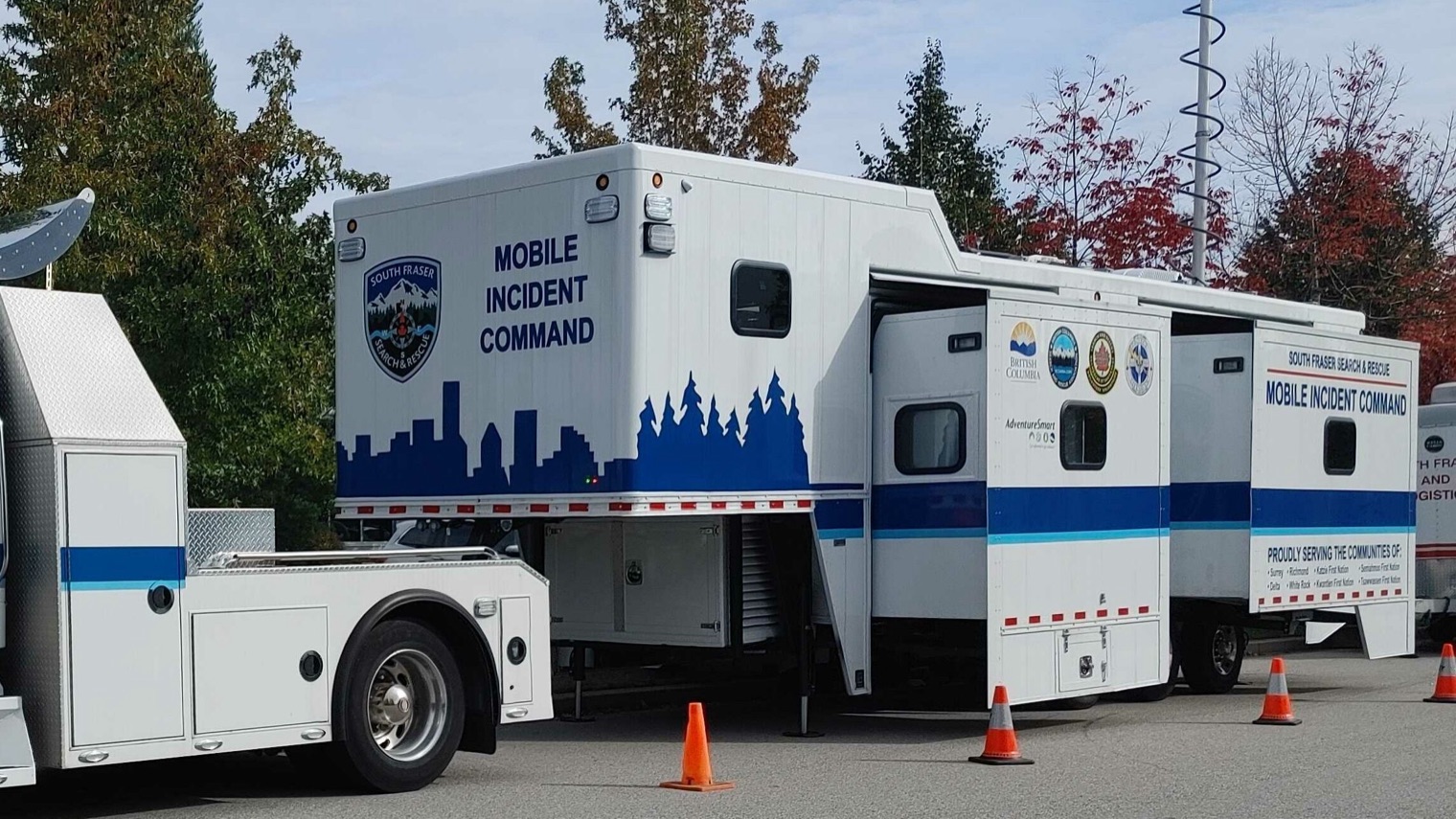
- Some help with incident management in our area
- No obligation to go out on searches
Questions and details
I have no search and rescue background. Can I still help?
Absolutely. Our members come from all walks of life, with very different skills and experience. You don’t need a law enforcement or search and rescue background: our training turns members into highly skilled searchers over time, in a supportive team.
We choose new members for teamwork and people skills; the technical skills are taught in training.
Application process: field members
Applications are accepted year-round, but intake generally happens once a year. Successful applicants are invited to a field day, where we look at team dynamics and more, followed by an interview.
Selected applicants become Members in Training (MITs). Before becoming field members, MITs:
- Complete the online Introduction to SAR in BC course (7 hours)
- Complete our in-house Ground Search and Rescue course (at least 6 months and 70 hours)
- Attend regular training as well (Thursday evenings, sometimes other days)
- Hold at least a 14-hour first aid certificate (all members must keep this current)
- Meet the minimum hours requirement for training and responses
Application process: resource members
Applications are reviewed as they come in. When the team is very busy, this can take several weeks to a month or more. We’ll usually contact you by phone to set up next steps.
After you apply, you’ll receive an email with links to the required courses and a police records check.
The commitment
Field members: search and rescue is a big time commitment. Field members commit at least 100 hours a year (more in the first year), which is what it takes to be safe and effective.
- Attend MIT training in your first year, and regular all-member training (usually Thursday evenings)
- Live within about 75 minutes of our service area
- Respond to emergencies on short notice, which can mean missing work and overnight responses
- Follow the EMCR and SFSAR codes of conduct, including confidentiality
- Commit to at least two years: your training is a big investment
Resource members:
- Attend general team meetings
- Volunteer in a wide range of roles
- Possibly attend public events (Canada Day, Emergency Services Day)
- Live within about 75 minutes of our service area
- Follow the EMCR and SFSAR codes of conduct, including confidentiality
Prospective K9 dog handlers
See the BC Search Dog Association website. At a minimum, you’ll need to complete the GSAR program and be a member of a BC GSAR team for two years before being considered as a handler. We can’t consider handlers outside this policy.
Raising a search dog is a huge undertaking. Search dogs aren’t pets: it takes thousands of hours of training to train and validate one.